Apple Watch Series 12 Siri Recaps Controversy: Should Privacy Concerns Stop You From Buying?
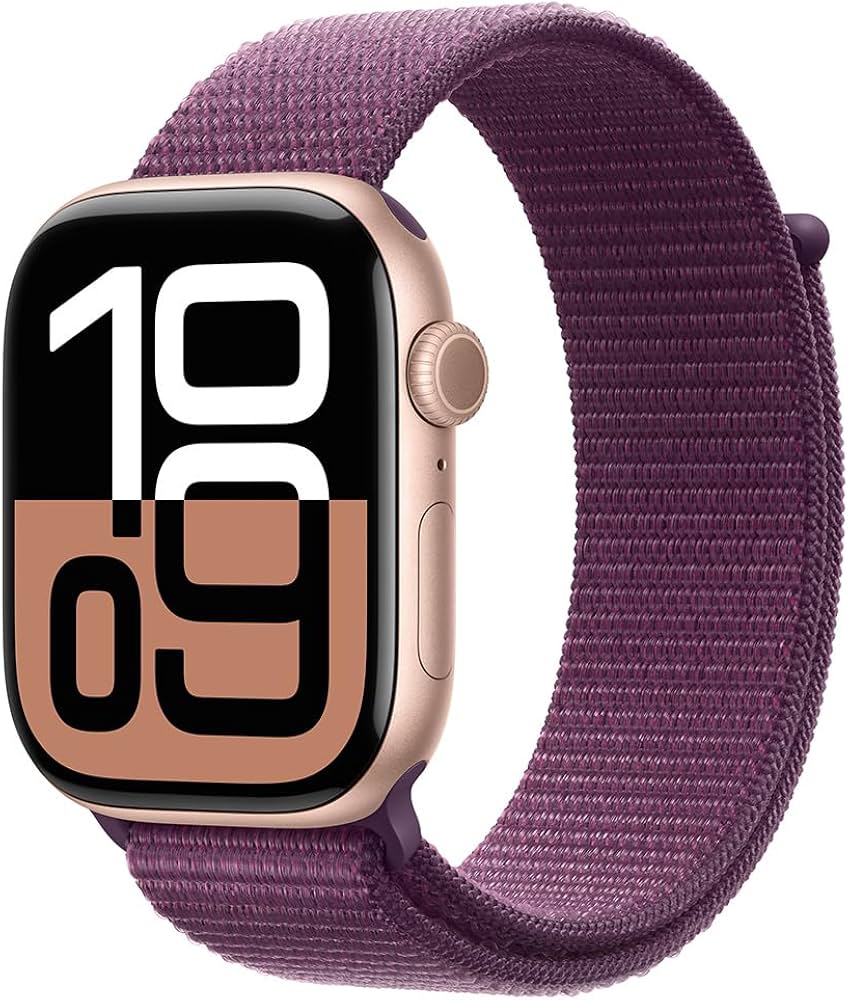
The Apple Watch Series 12 launched on Friday, September 18 to strong reviews for its Health Sensing System and new S11 chip. But the weekend conversation has been dominated by something else entirely: Siri Recaps and Live Rewind, two upcoming features that use the watch's microphone to listen to conversations around you. Critics call it surveillance. Apple calls it a memory aid. We break down what's actually happening and whether it should change your buying decision.
The Controversy
Siri Recaps listens to conversations and generates AI summaries. Critics say it normalizes ambient surveillance on wearables.
Apple's Defense
All processing happens locally on the S11 Secure Exclave. No audio is stored, sent to servers, or accessible to apps — only text summaries remain.
Our Verdict
The features are fully optional and not even available yet. The Series 12 is worth buying for its health features alone. Disable Siri Recaps if privacy concerns you.
What Exactly Are Siri Recaps and Live Rewind?
Both features are part of Apple's new Audio Intelligence Suite, powered by the S11 chip in the Series 12 and Ultra 4. They are not available at launch— Apple says they'll arrive in watchOS 27.1 "later this year."
Siri Recapsuses the watch's microphone to listen to your surroundings throughout the day. Apple Intelligence running on the S11's Secure Exclave processes the audio in real time, extracting key moments — action items from meetings, names mentioned in conversations, important details you might want to recall later. It then generates brief text summaries that appear as cards on your watch face. Apple describes them as "memory joggers" designed to help you stay present in the moment instead of taking notes.
Live Rewindis more limited. When you double-press the Digital Crown, the watch converts the previous 15 seconds of nearby speech into a text snippet. Think of it as a "what did they just say?" button. It only works on demand — it does not continuously generate text.
How Does Apple Protect Your Privacy?
Apple's privacy architecture for these features is genuinely robust. The S11 chip includes a dedicated Secure Exclave — a hardware-isolated processing environment that handles all audio. According to Apple:
- No raw audio is ever stored on the watch, iPhone, or iCloud
- Audio processing happens entirely within the Secure Exclave — the watchOS operating system itself cannot access raw audio
- No audio is sent to Apple's servers
- Third-party apps cannot access the Audio Intelligence pipeline
- Only the resulting text summaries are stored, and they sync via end-to-end encrypted iCloud
Users have granular control: Siri Recaps can be left always-on, restricted to specific locations (your office but not your home), put on a time schedule, or disabled completely. Live Rewind only activates on a deliberate double-press of the Digital Crown.
Why Are People Concerned?
The backlash centers on normalization, not Apple's specific implementation. A PCMag opinion column called Siri Recaps "mass surveillance in a watch," arguing that even opt-in ambient listening by the world's most popular smartwatch brand makes it socially acceptable for all wearable makers to follow suit — with potentially weaker privacy protections.
Privacy advocates point out that when you wear a device that listens to conversations, other people in the room haven't consented. This is the same debate that followed Meta Ray-Ban smart glasses, but amplified because Apple Watch has a much larger installed base. The concern isn't that Apple will misuse your data — it's that the feature creates a social expectation that wearables are always listening.
Legal questions vary by jurisdiction. In two-party consent states (like California, where Apple is headquartered), recording conversations without all parties' consent is illegal. Apple argues that Siri Recaps doesn't "record" because no audio is stored — only AI-generated text summaries. Whether courts will agree remains untested.
How Does This Compare to Other Wearables?
Apple isn't the first wearable maker to use ambient listening. Meta Ray-Ban smart glasses already process ambient audio for Live AI conversations, and the audio is sent to Meta's servers for processing. The Plaud One AI earbudsare specifically designed to transcribe meetings. Samsung's Galaxy Buds 4 Pro offer real-time translation that requires ambient audio processing.
What makes Apple's implementation different is the on-device processing. Competitors like Meta and Plaud send audio to cloud servers. Apple's Secure Exclave approach means the raw audio never leaves the chip — a meaningful privacy advantage if you accept the premise of ambient listening at all.
Should Privacy Concerns Stop You From Buying the Series 12?
No. Here's why: Siri Recaps and Live Rewind are not available yet, are completely optional, and can be permanently disabled. You lose nothing by turning them off — the Series 12's core value is its Health Sensing System, S11 chip, Readiness score, 128GB storage, and Ceramic Shield 2 durability. None of those depend on Audio Intelligence.
If you own a Series 10 or older, the Series 12 at $399 is the biggest upgrade cycle in years. The Health Sensing System with 5-second heart rate readings and 24x more frequent HRV sampling delivers a meaningfully better Readiness score than the software-only version on older models. The S11 chip is the first new silicon in three generations.
If you own a Series 11, the case for upgrading is weaker — the design is identical, and watchOS 27 brings the Readiness app to your current watch. But even here, the privacy controversy is a non-issue: don't enable features you don't want.
What This Means for the Wearable Industry
Regardless of your personal buying decision, Siri Recaps signals a broader shift. Meta is already doing ambient listening on glasses. Samsung and Google are adding ambient AI to earbuds. Apple's entry legitimizes the category for the mainstream market. Expect every major wearable maker to add similar features within 12 months.
The question isn't whether wearables will listen — it's whether they'll all match Apple's on-device, no-storage approach. If you care about privacy, the Series 12's Secure Exclave architecture is actually the best-case scenario for how this technology should work. Rejecting it may push the market toward cloud-processed alternatives that are objectively worse for privacy.
For more context on the Series 12, read our hands-on review roundup or compare the Series 12 vs Ultra 4. If you're considering alternatives, browse all smartwatches or check our comparison tool.
Related Articles
Frequently Asked Questions
- Does Siri Recaps record my conversations on Apple Watch Series 12?
- No. Siri Recaps does not create or store audio recordings. The S11 chip's Secure Exclave processes audio locally on the watch to generate text summaries, then discards the raw audio. Apple states the audio is 'completely inaccessible to the operating system, apps, the user, or Apple.' You get a text summary, not a recording.
- Can I turn off Siri Recaps and Live Rewind on Apple Watch Series 12?
- Yes. Both features are fully optional. You can leave Siri Recaps always on, restrict it to specific locations (like your office), set a schedule, or disable it entirely. Live Rewind only activates when you deliberately double-press the Digital Crown — it does not run in the background.
- When will Siri Recaps and Live Rewind be available on Apple Watch Series 12?
- Apple has only said 'later this year' with the watchOS 27.1 update. Both features will launch in English first and will not be available in the EU at launch due to regulatory considerations. They require an Apple Watch Series 12 or Ultra 4 — older models will not get these features.
- Is the Apple Watch Series 12 still worth buying without Siri Recaps?
- Absolutely. The Health Sensing System with 5-second heart rate readings, 24x more frequent HRV sampling, the Readiness score, S11 chip, 128GB storage, and Ceramic Shield 2 are all available at launch. Siri Recaps is an optional future feature — the core health and fitness experience is excellent right now at $399.
- How does Apple Watch Series 12 ambient listening compare to Meta Ray-Ban smart glasses?
- Meta Ray-Ban glasses already use ambient listening for Live AI conversations and can transcribe speech in real time. The key difference is Apple processes everything on-device via the Secure Exclave with no server connection, while Meta's Live AI sends audio to cloud servers for processing. Apple's approach is more private by design, though both companies let you disable the features.