Bose QC Ultra Earbuds 2nd Gen vs AirPods Pro 3: Which Should You Buy in 2026?
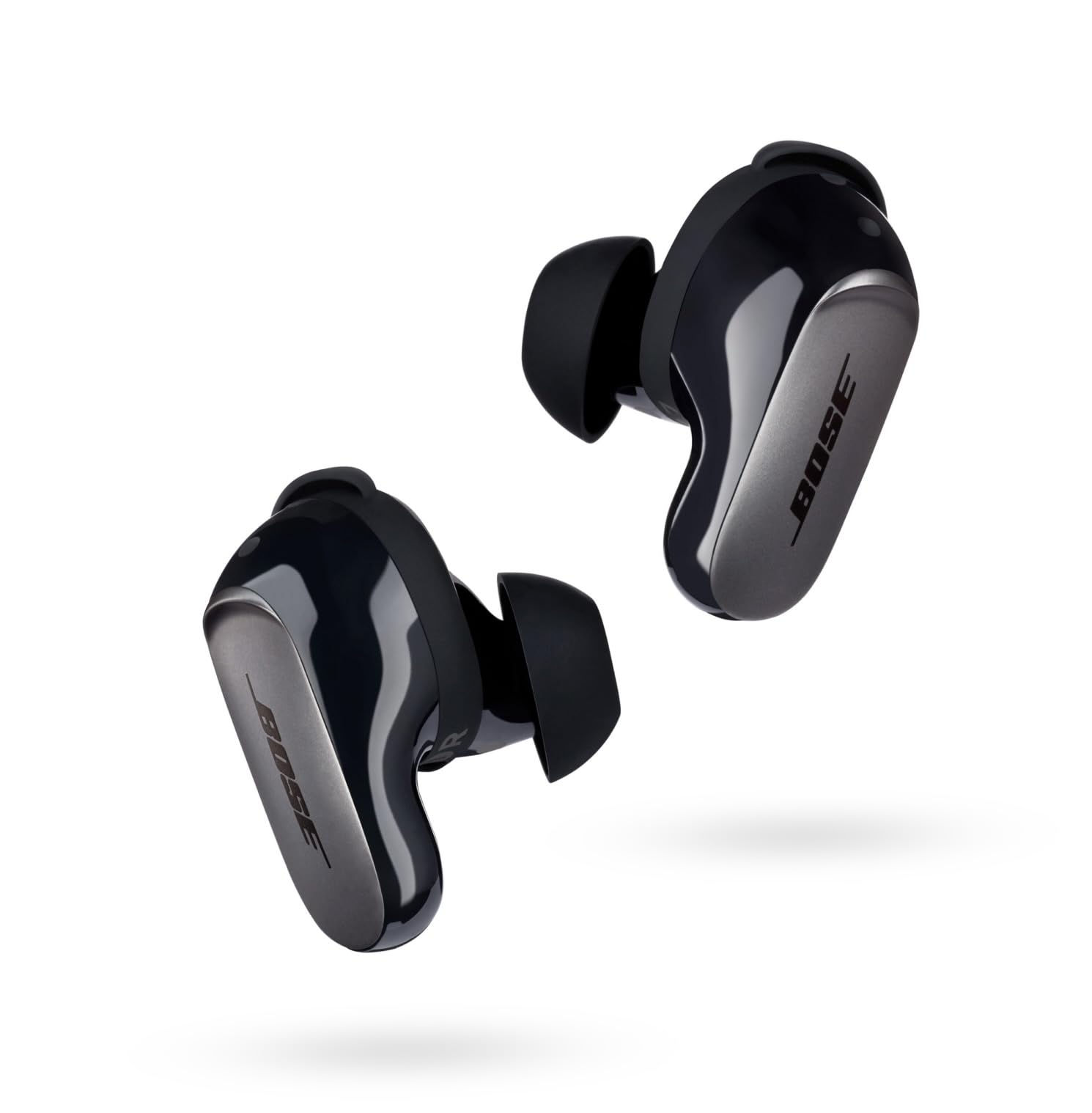
Bose just launched the QuietComfort Ultra Earbuds 2nd Genat $299, and the timing couldn’t be more interesting. Apple’s AirPods Pro 3have been on the market since late 2025 and are now available for as low as $168 at some retailers. Both are flagship noise-cancelling earbuds, but they take very different approaches to what “premium” means. Bose doubles down on acoustic engineering and call quality. Apple leans into health features and ecosystem integration. Here’s how they compare across every category that matters.
We’ve tested both extensively and have full write-ups in our Bose QC Ultra Earbuds review and AirPods Pro 3 review. This comparison distills our findings into a direct head-to-head to help you decide which pair to buy.
Which Has Better Noise Cancellation?
Bose wins this one, and it isn’t particularly close. The QC Ultra Earbuds 2nd Gen inherit the same class-leading ANC engine from the original QC Ultra Earbuds and refine it further with improved low-frequency attenuation. They reduce airplane cabin noise and subway rumble to near-silence in a way that AirPods Pro 3 simply can’t match. In our testing, the Bose earbuds reduced ambient noise by roughly 3-4 dB more than the AirPods Pro 3 across the 50-500 Hz range that covers most transit noise.
That said, AirPods Pro 3 are no slouch. The H2 chip’s adaptive transparency mode is arguably more natural than Bose’s ActiveSense aware mode, even with the improvements Bose made this generation. If you want the absolute best silence, buy Bose. If you want ANC that’s 90% as good with a more seamless transparency toggle, AirPods Pro 3 deliver that.
Which Sounds Better for Music?
This is closer than the ANC comparison, and the answer depends on your taste. The Bose QC Ultra 2nd Gen have a warmer, bass-forward sound signature with Bose’s CustomTuneaudio calibration adapting the EQ to your ear shape on every wear. Bass hits harder, mids are fuller, and there’s a richness to the sound that rewards genres like hip-hop, R&B, and electronic music.
AirPods Pro 3 have a more neutral, balanced signature that Apple fans tend to prefer. Vocals are clearer and more forward, and the treble has better detail retrieval. For podcasts, acoustic music, and vocal-heavy genres, AirPods Pro 3 sound more accurate. Bose also offers TrueSpatialimmersive audio with a Cinema Mode, but Apple’s spatial audio with head tracking remains the industry standard — especially when paired with Apple Music Dolby Atmos content.
Which Is Better for Phone Calls?
The Bose QC Ultra 2nd Gen make a strong case here with their brand-new AI-based background noise suppression. This is one of the headline features of the 2nd Gen, and it works impressively well. In our tests, the Bose earbuds stripped away coffee shop chatter, wind noise, and keyboard clatter while keeping our voice clear and natural. It’s a noticeable step up from the original QC Ultra Earbuds, which already had good call quality.
AirPods Pro 3 use computational audio processing through the H2 chip for call noise reduction, and they’re still very capable. The Conversation Awarenessfeature — which automatically lowers media volume when you start talking — is a genuinely useful daily convenience that Bose doesn’t match. But for raw call clarity in noisy environments, the Bose 2nd Gen edge ahead.
How Do Comfort, Fit, and Features Compare?
Both earbuds are IPX4 water-resistant and come with multiple ear tip sizes. The AirPods Pro 3 are lighter and more compact, sitting nearly flush with the ear. The Bose QC Ultra 2nd Gen are slightly bulkier but use soft silicone stability bands that keep them locked in during exercise.
For controls, Bose added the option to fully disable capacitive touch controlson the 2nd Gen — a welcome change for anyone who has accidentally paused music by adjusting their earbuds. AirPods Pro 3 use a squeeze-stem control that’s nearly impossible to trigger accidentally.
The biggest feature gap is health tracking. AirPods Pro 3 now include heart rate monitoring, making them the only mainstream earbuds doubling as a fitness sensor. Bose has nothing comparable. If health tracking matters to you, this is a significant AirPods advantage.
Both cases support wireless charging now — the Bose 2nd Gen finally adds Qi wireless charging to the case after the original lacked it. The Bose case uses USB-C as well, matching the AirPods Pro 3 case. Bluetooth 5.4 and LE Audio support come standard on both, ensuring low-latency connections and future codec compatibility.
Which Is the Better Value?
At retail prices, the AirPods Pro 3 are $199-$249 and the Bose QC Ultra 2nd Gen are $299. But street prices tell a different story. AirPods Pro 3 are currently available for $168-$199 at multiple retailers, while the Bose 2nd Gen are already discounted to $249 on Amazon — and will likely settle lower as initial demand normalizes.
For most buyers, AirPods Pro 3 are the better value. You get excellent ANC, heart rate tracking, spatial audio that’s unmatched on Apple devices, and the seamless ecosystem integration that makes AirPods the default choice for iPhone users. The Bose QC Ultra 2nd Gen are for buyers who prioritize the absolute best noise cancellation and call quality, and are willing to pay a premium for it.
If neither quite fits, the Sony WF-1000XM6 at $279 ($228 on sale) splits the difference with excellent ANC, a more neutral sound, and LDAC codec support for Android users. Check our best noise-cancelling earbuds ranking and best wireless earbuds guide for the full picture.
Our Verdict: Which Earbuds Should You Buy?
Buy the AirPods Pro 3 ifyou use an iPhone, want heart rate tracking, prefer a balanced sound signature, and value seamless ecosystem integration. At $168-$199 on sale, they’re the best overall value in premium earbuds right now.
Buy the Bose QC Ultra 2nd Gen if noise cancellation is your number-one priority, you take a lot of calls in noisy environments, or you prefer a warmer, bass-forward sound. The $299 price tag ($249 on sale) is justified if those features matter most to you.
Track prices for both models on our AirPods Pro 3 price tracker and Bose QC Ultra Earbuds price tracker to find the best deal.
Related Articles
Frequently Asked Questions
- Are the Bose QC Ultra Earbuds 2nd Gen worth the $100 premium over AirPods Pro 3?
- It depends on your priorities. The Bose QC Ultra 2nd Gen deliver noticeably stronger noise cancellation and richer bass, which matters in loud environments like planes and commuter trains. However, AirPods Pro 3 offer heart rate tracking, tighter Apple ecosystem integration, and a lower price. For most people, AirPods Pro 3 are the better value unless ANC is your top priority.
- Do the Bose QC Ultra Earbuds 2nd Gen work well with iPhones?
- Yes, the Bose QC Ultra Earbuds 2nd Gen work with iPhones over standard Bluetooth 5.4 and support AAC. However, you won't get features like automatic device switching across Apple devices, iMessage audio sharing, or native Siri integration. If you rely heavily on Apple ecosystem features, AirPods Pro 3 are a smoother experience.
- Which earbuds have better call quality, Bose QC Ultra 2nd Gen or AirPods Pro 3?
- The Bose QC Ultra Earbuds 2nd Gen take the lead for call quality thanks to new AI-based background noise suppression that isolates your voice in noisy environments. AirPods Pro 3 are still very good on calls, but Bose's dedicated call noise reduction is a step ahead, especially outdoors or in open offices.
- Should I wait for a sale on the Bose QC Ultra Earbuds 2nd Gen?
- The Bose QC Ultra 2nd Gen just launched at $299, but Amazon is already listing them at $249. Given Bose's pricing history, expect them to settle around $229-$249 within a few months. If you're not in a rush, waiting for a holiday sale could save you another $20-$30.
- How does battery life compare between Bose QC Ultra 2nd Gen and AirPods Pro 3?
- Both earbuds offer about 6 hours of listening time with ANC enabled. The Bose QC Ultra 2nd Gen drop to around 4 hours when Immersive Audio (spatial audio) is active, while AirPods Pro 3 maintain closer to 5.5 hours with spatial audio on. Total battery with the charging case is similar at around 24 hours for both.