Viture Pro 2 vs XREAL Air 2 Pro: Best Budget XR Glasses August 2026
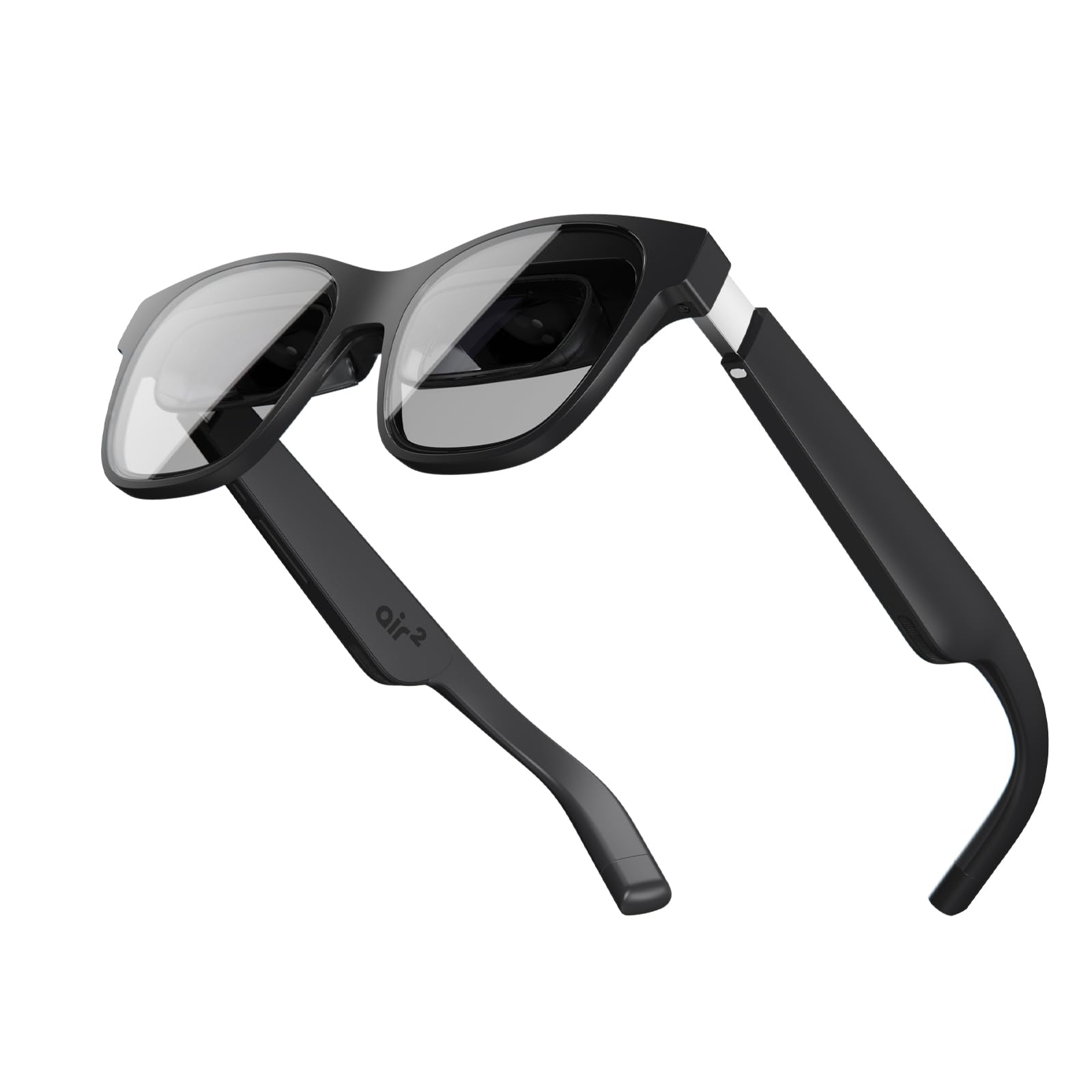
The budget XR glasses category just got a lot more competitive. Viture launched the Pro 2 on August 6 at $299, undercutting the long-standing budget champion, the XREAL Air 2 Pro ($375 on Amazon), by $76 while claiming a brighter panel and wider field of view. Both are lightweight, USB-C-powered display glasses that plug into a phone, laptop, or console to project a giant private screen in front of your eyes. So which one should you actually buy? We compared every spec that matters.
Best for Movies
Viture Pro 2 — a bigger 146-inch virtual display and higher 1600-nit brightness for $299.
Best for Gaming
XREAL Air 2 Pro — electrochromic dimming and 6DoF spatial tracking with the optional Beam Pro.
Compare Next
Browse all smart glasses or head to our comparison tool.
Why Are Budget XR Glasses Suddenly So Good?
Eighteen months ago, a decent pair of display glasses cost $450 or more and used dim, low-resolution panels. Sony's newer micro-OLED modules changed that math, letting both Viture and XREAL push brightness and resolution up while pushing prices down. The result is a genuine two-horse race at the sub-$400 tier, with the Viture Pro 2's August 6 launch forcing the question of whether XREAL's incumbent is still worth the premium.
How Do the Displays Compare?
Both glasses use 1920x1080-per-eye Sony micro-OLED panels running at 120Hz, so motion smoothness is a wash. The real difference is brightness and field of view. The Viture Pro 2 hits 1600 nits and a 50-degree FOV, producing a virtual screen equivalent to 146 inches. The XREAL Air 2 Pro tops out at 500 nits and a 46-degree FOV, with a slightly smaller 130-inch virtual screen.
In practice, the Viture Pro 2's brightness advantage is the bigger deal. Anything under 600 nits struggles in daylight or a lit room, and 1600 nits lets the Pro 2 stay watchable on a plane by a window or on a sunny patio, where the Air 2 Pro washes out. The wider FOV also makes the image feel less like looking through a letterbox and more like an actual screen filling your vision.
Which Is More Comfortable for All-Day Wear?
Weight matters enormously for glasses you wear on your face for hours. The Viture Pro 2 weighs 63g, while the XREAL Air 2 Pro weighs 75g — a 12g gap that's noticeable on the nose bridge after 90 minutes of continuous use.
Vision correction is another point in Viture's favor. The Pro 2 has a built-in diopter dial adjustable from 0 to -5.00D, so nearsighted users can dial in their prescription on the fly without buying anything extra. The XREAL Air 2 Pro requires magnetic clip-on prescription inserts, which cost extra, must be ordered separately for your specific prescription, and add a step every time you put the glasses on.
What About Accessories and Compatibility?
Viture's ecosystem play is the Mobile Dock Mini ($99), a 10,000mAh battery dock built with Nintendo Switch 2 support front and center — dock the console, plug in the Pro 2, and play on a 146-inch screen without draining the Switch's battery. It's a strong pick for handheld console gamers who want a big-screen experience on the go.
XREAL's equivalent accessory is the Beam Pro ($119), which adds 6DoF spatial tracking so the Air 2 Pro can anchor virtual screens in physical space and support more advanced spatial computing apps. This gives the XREAL ecosystem an edge for buyers who want to go beyond a simple virtual monitor and experiment with room-scale AR content.
Which Should You Buy?
Buy the Viture Pro 2 ($299) if: You mainly want a private big-screen for movies, shows, and streaming. It's brighter, lighter, wider-FOV, and cheaper — the clear value leader for content consumption, and the built-in diopter adjustment means most users can skip prescription inserts entirely.
Buy the XREAL Air 2 Pro ($375) if: You want to game or experiment with spatial computing. Electrochromic dimming gives better outdoor contrast control, and the optional Beam Pro unlocks 6DoF tracking that the Viture ecosystem doesn't match yet. XREAL's software and app ecosystem is also more mature after several product generations.
Read our full Viture review and XREAL Air 2 Pro review, check XREAL pricing, or browse all smart glasses to compare more options. If you're also shopping for audio to pair with your setup, see our best noise-cancelling earbuds guide.
Related Articles
Viture Pro 2 vs XREAL Air 2 Pro FAQ
Common questions about budget XR glasses
Quick answers covering price, comfort, console support, and prescription options for both the Viture Pro 2 and XREAL Air 2 Pro.
Are the Viture Pro 2 worth $299?
Yes, for most buyers. At $299 the Viture Pro 2 packs a brighter 1600-nit Sony micro-OLED panel, a wider 50-degree field of view, a 146-inch virtual screen, and a 63g frame with built-in diopter adjustment. It undercuts the XREAL Air 2 Pro by $76 while beating it on brightness and FOV, making it the strongest value pick in the budget XR category.
Is XREAL Air 2 Pro better than Viture Pro 2?
It depends on your use case. The XREAL Air 2 Pro has electrochromic dimming for better outdoor contrast and a more mature ecosystem, including the optional Beam Pro accessory for 6DoF spatial computing and gaming. The Viture Pro 2 wins on raw display specs (brightness, FOV, virtual screen size) and weighs 12g less, making it more comfortable for long movie-watching sessions.
Can you use Viture Pro 2 with Nintendo Switch 2?
Yes. The optional Viture Mobile Dock Mini ($99) is built with Nintendo Switch 2 support in mind, adding a 10,000mAh battery and a stable USB-C connection so you can dock the console and play on a 146-inch virtual screen without draining the Switch's own battery.
Do you need prescription inserts for Viture Pro 2?
Not necessarily. The Viture Pro 2 has a built-in diopter dial that adjusts from 0 to -5.00D directly on the glasses, so most nearsighted users can skip inserts entirely. The XREAL Air 2 Pro, by contrast, requires magnetic clip-on prescription inserts, which is an extra purchase and an extra step before each use.