Apple Vision Pro Controller Reversal: What This 74-Page Spec Means for Buyers
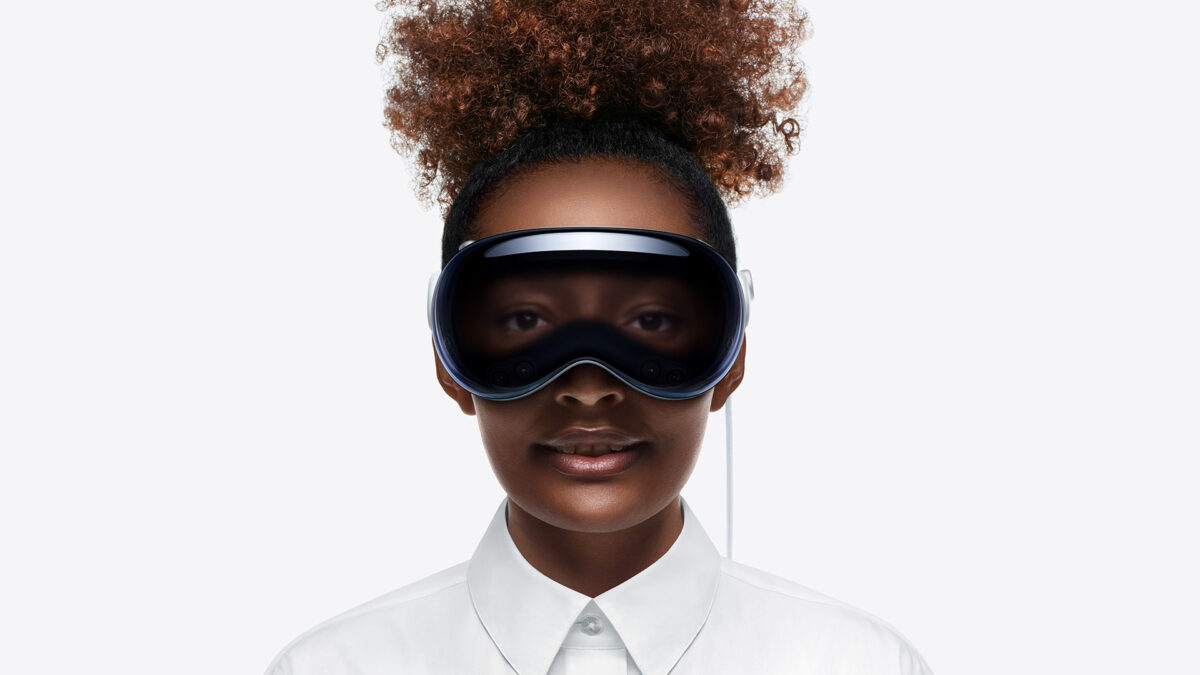
When Apple launched Vision Pro in early 2024, the message was clear: hands and eyes are all you need. Two years later, Apple has published a 74-page technical specification explaining exactly how third-party manufacturers should build motion controllers for the headset. It is one of the most significant strategy reversals in Apple's recent hardware history — and it has real implications for anyone considering a Vision Pro purchase.
The Reversal
Apple published a 74-page third-party controller spec for Vision Pro after insisting for two years that controllers were unnecessary.
Timeline
visionOS 27 arrives this fall. Dev kits from DFRobot and MIKROE ship around the same time. Consumer controllers could appear by early 2027.
Compare Next
See how Vision Pro stacks up in our AR/VR headset guide or the compare hub.
What Does the 74-Page Specification Cover?
The spec, published as a new “Spatial Accessories” section of Apple's Accessory Design Guidelines, is exhaustively detailed. It defines a spatial accessory as an active electronic device built from three required components:
- IR LED constellation: A pattern of infrared LEDs with specific wavelength and radiance requirements. Vision Pro's external cameras track these LEDs to determine the controller's position in 3D space.
- IMU chip: An inertial measurement unit that streams orientation and acceleration data to the headset via Bluetooth, filling in between camera frames for smooth tracking.
- Bluetooth connection: The communication link between accessory and headset, carrying both IMU data and input events.
Buttons, thumbsticks, and haptic motors are listed as optional but supported. The spec even includes a complete example logic board layout — the kind of detail you see in a manufacturing guide, not a concept document.
Why Did Apple Change Its Mind?
Apple's hands-and-eyes input worked well for productivity and media consumption — the two use cases Apple originally emphasized. But it frustrated developers building games, creative tools, and precision applications. The Meta Quest 3, with its Touch Plus controllers, continued to dominate VR gaming precisely because physical controllers offer the precision and tactile feedback that hand tracking cannot match.
The competitive pressure from Samsung's Galaxy XR — which launched with optional controllers from day one — likely accelerated the decision. Apple's publishing of a controller spec isn't an admission that hand tracking failed; it's an acknowledgment that both input methods are needed for the headset to serve its full potential market.
How Good Will the Tracking Be?
On paper, very good. The spec states that spatial accessories track at up to the headset's display rate — nominally 90Hz, potentially 120Hz. That's competitive with the Meta Quest 3's controller tracking. The IMU fusion means controllers maintain tracking even when partially hidden from the headset's cameras, solving the occlusion problem that plagues camera-only tracking systems.
Real-world performance will depend on how well third-party manufacturers execute the spec. Apple's partnership with DFRobot and MIKROE for reference dev kits suggests the company wants to set a quality baseline early.
What Does This Mean for Vision Pro vs Meta Quest 3?
Controller support narrows one of Meta's key advantages, but doesn't erase it. The Quest 3 still offers a much larger VR gaming library, a fraction of the price ($597 on Amazonvs. Vision Pro's $2,000+ refurbished), and years of controller-optimized content. Vision Pro's strengths — higher resolution, superior passthrough, and a growing productivity ecosystem — become more compelling with controller support adding gaming and creative tools to the mix.
For the Meta Quest 3S ($350) buyer, nothing changes — it remains the best-value VR headset available. But for buyers deciding between a premium headset and the Vision Pro, the controller gap is now closing.
Should You Buy a Vision Pro Now or Wait?
Buy now if you primarily want Vision Pro for productivity, media, and spatial computing. Controller support is coming, but hand tracking already handles these use cases well. The refurbished M5 Vision Pro from $2,000 is the best entry point.
Wait if gaming or creative tools are your primary interest. Controllers won't ship until late 2026 at the earliest, and the software ecosystem for controller-based Vision Pro content needs time to develop. Meta Connect 2026 in September may also reveal next-gen Quest hardware worth considering.
For a broader view of the XR landscape headed into fall 2026, including the Valve Steam Frame and Samsung Galaxy XR, see our full AR/VR headset guide.
Related Articles
Vision Pro FAQ
Common questions about Vision Pro controller support
Quick answers about Apple's 74-page controller spec and what it means for current and prospective Vision Pro owners.
When will third-party Vision Pro controllers be available?
visionOS 27, which enables controller support, ships this fall. Apple has partnered with DFRobot and MIKROE to create reference dev kits available around the same time. Consumer controllers could appear by holiday 2026 or early 2027.
Will Vision Pro controllers work with the original headset or only the M5 refresh?
The spec is part of visionOS 27, which supports both the original Vision Pro and the M5 refresh. Controller tracking uses the existing camera system and Bluetooth, so no new hardware is required on the headset side.
Does this make Vision Pro better than Meta Quest 3 for gaming?
It narrows the gap significantly. The Quest 3 still has a much larger VR gaming library and lower price point. But with controller support, Vision Pro gains the physical precision gaming requires — a critical missing piece since launch.
Are Apple-made controllers coming?
Apple has not announced a first-party controller. The 74-page spec is explicitly designed for third-party manufacturers. Apple is providing reference hardware and dev kits through DFRobot and MIKROE instead.
How accurate is the Vision Pro controller tracking?
According to the spec, spatial accessories track at up to the headset's display rate — nominally 90Hz and potentially 120Hz. They can maintain tracking even when partially occluded from the headset's cameras.