Bose QuietComfort 2nd Gen vs Ultra: Which Over-Ear Headphone Should You Buy in August 2026?
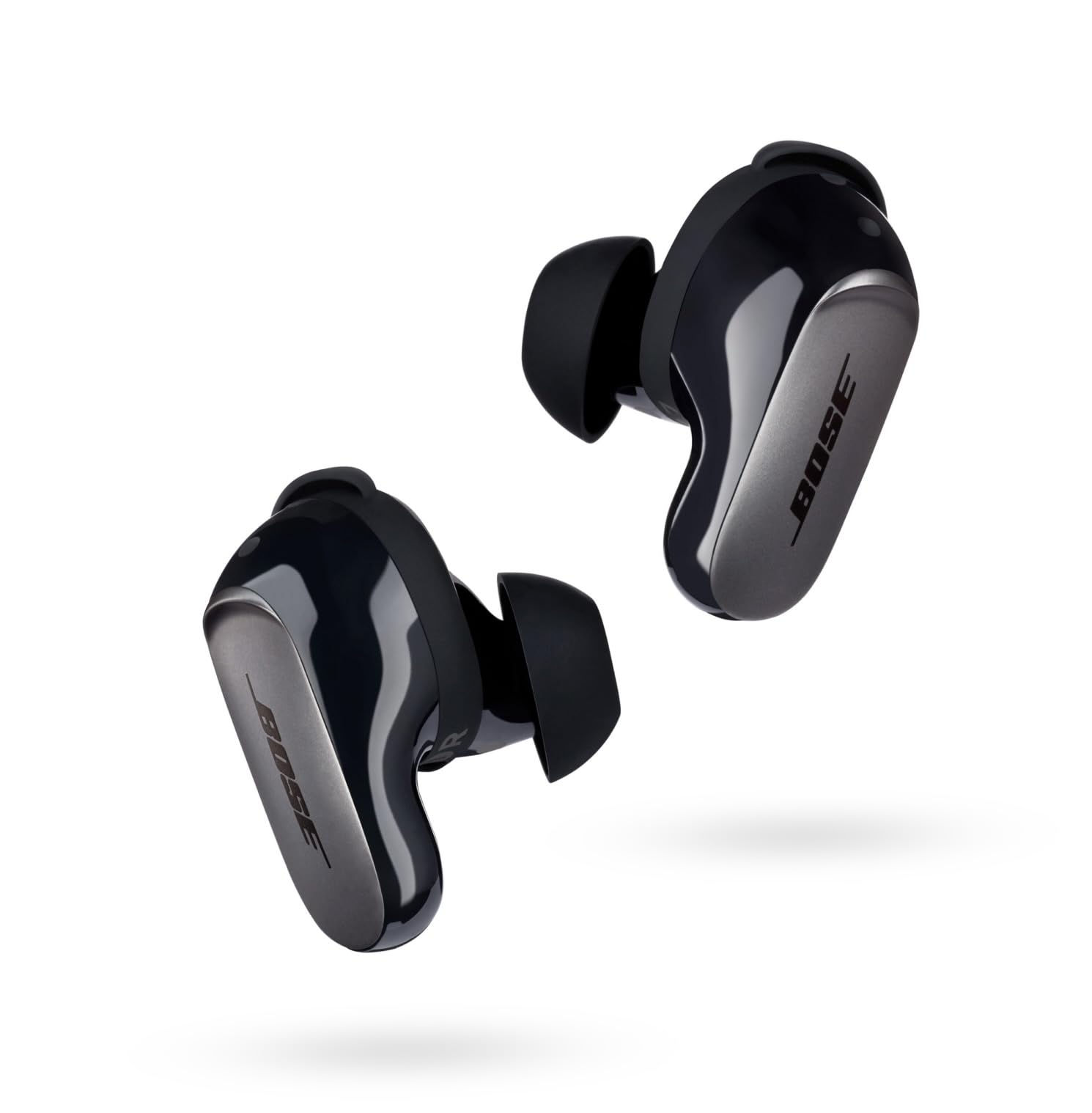
Bose just made the over-ear headphone market a lot more interesting. The QuietComfort Headphones (2nd Gen), announced August 6 at $359, borrow the Ultra's headline feature — TrueSpatial immersive audio — and bring it to a more accessible price point. With pre-orders opening August 8, the question for Bose fans is simple: save $70 with the new QC, or spend $429 for the Ultra? We break down every difference that matters.
QC 2nd Gen
$359 · TrueSpatial · 24hr battery · Lossless USB-C · 5 colors · Pre-orders Aug 8, ships Aug 13.
QC Ultra
$429 · TrueSpatial · 24hr battery · aptX Adaptive wireless lossless · CustomTune auto-EQ · Premium drivers.
Difference
$70 more for the Ultra gets wireless lossless, auto-EQ, and marginally better ANC. Browse all audio.
What Does TrueSpatial Immersive Audio Actually Do?
TrueSpatial is Bose's answer to Apple's Spatial Audio and Sony's 360 Reality Audio. It uses head-tracking sensors to create a three-dimensional sound field around you, making music and movies feel like they're coming from specific points in space rather than sitting flat between your ears.
Three listening modes adapt TrueSpatial to different activities. Still Mode locks the soundstage in place — turn your head and the audio stays put, as if speakers are fixed in the room. Motion Mode lets the wider soundstage follow you, better for walking or commuting. Cinema Mode spreads background effects across a wider space while keeping dialogue centered, ideal for movies and podcasts.
Until yesterday, TrueSpatial was only available in the $429 Ultra line. The QC 2nd Gen brings all three modes at $359, which is the single biggest reason this launch matters.
What Does the Ultra Still Do Better?
The $70 premium for the Ultra buys you three things. First, aptX Adaptive wireless codec support, which delivers near-lossless audio quality over Bluetooth from compatible Android devices and laptops — the QC 2nd Gen only gets lossless via a wired USB-C connection. Second, CustomTune auto-EQ, which uses the headphone's mics to map your ear shape and automatically adjust the frequency response for a more personalized sound. Third, marginally better ANC from slightly higher-end drivers and more aggressive processing.
For most listeners, these differences are subtle. The wireless lossless gap matters most to audiophiles with aptX-compatible source devices. The CustomTune tuning is a nice-to-have that most users won't notice after the first week. The ANC difference is measurable in testing but difficult to perceive in real-world use.
How Do They Compare to AirPods Max 2 and Sony WH-1000XM6?
The AirPods Max 2 at $558 remains the premium pick for Apple ecosystem users, with seamless device switching, lossless over Lightning/USB-C, and the best build quality in the category. But at $199 more than the QC 2nd Gen, the value gap has widened significantly now that Bose offers spatial audio at $359.
The Sony WH-1000XM6 was the previous gold standard at $399, but Sony has shifted to the new WH-1000XX ("The ColleXion") premium line. The older XM6 can be found refurbished at $299 on eBay, making it a compelling value option for buyers who prioritize codec flexibility (LDAC support) over Bose's TrueSpatial.
The Sennheiser Momentum 4 at $189 on eBay remains the value king for audiophiles who want outstanding sound quality and don't need spatial audio.
Which Bose Headphone Should You Buy?
Buy the QC 2nd Gen ($359) if: You want Bose's immersive audio experience at the best possible price. The 2nd Gen delivers 90% of the Ultra's experience at 83% of the cost. For iPhone users especially — who can't benefit from the Ultra's aptX Adaptive anyway — this is the obvious choice.
Buy the Ultra ($429) if: You have an aptX-compatible Android phone or laptop and want wireless lossless audio quality. The $70 premium also gets you CustomTune auto-EQ and slightly better noise cancellation. For audiophiles, these differences justify the cost.
Skip both if: You already own the original QC Headphones or the Ultra and are happy with them. The improvements are meaningful but not transformative enough to justify upgrading from a recent Bose purchase.
Read our best noise-cancelling audio guide, check Bose pricing, or browse all audio wearables to compare.
Related Articles
Bose QC 2nd Gen FAQ
Common questions about the Bose QuietComfort 2nd Gen
Quick answers covering price, features, how it compares to the Ultra, and whether it's worth upgrading.
What is the difference between Bose QuietComfort 2nd Gen and Ultra?
Both now share TrueSpatial immersive audio. The Ultra adds higher-resolution drivers, Qualcomm aptX Adaptive for wireless lossless from compatible devices, CustomTune auto-EQ, and slightly better ANC. The QC 2nd Gen offers 90% of the Ultra experience at $70 less.
When can I buy the Bose QuietComfort 2nd Gen?
Pre-orders open August 8, 2026 at $359. Shipping begins August 13. Available at Bose.com, Amazon, Best Buy, and other major retailers in five colors: Eucalyptus Green, Black, White Smoke, Rosewood Mauve, and Dewdrop Mint.
Are the Bose QuietComfort 2nd Gen better than AirPods Max 2?
At $359 vs $558, the QC 2nd Gen are significantly cheaper and now match the AirPods Max 2 on spatial audio with TrueSpatial. The AirPods Max 2 integrate better with Apple devices and have a premium aluminum build, but pure audio value favors Bose.
Do the Bose QuietComfort 2nd Gen have lossless audio?
Yes, via USB-C wired connection. For wireless lossless, you would need the Bose QC Ultra Headphones which support Qualcomm aptX Adaptive. The QC 2nd Gen use standard Bluetooth codecs (SBC, AAC) for wireless playback.
How long does the Bose QuietComfort 2nd Gen battery last?
Up to 24 hours with ANC on, or 18 hours with TrueSpatial immersive audio enabled. This is comparable to the Ultra's battery life and significantly longer than the AirPods Max 2's 20 hours.