Even Realities Hits $1B: Camera-Free vs Camera Smart Glasses — Which Should You Buy? (2026)
Even Realities just closed a $150 million funding roundled by Meituan and Tencent, pushing the company’s valuation to $1 billion. The company makes smart glasses with no camera — a deliberate choice that sidesteps the privacy debates engulfing Meta and Samsung while offering something neither competitor has: a heads-up display that puts information directly in your line of sight.
This milestone crystallizes a split forming in the smart glasses market. One camp puts a camera on your face and pairs it with AI. The other puts a display in your lens and pairs it with productivity tools. We break down both approaches, compare the leading products, and help you decide which fits your life.
How Do Camera-Free Glasses Differ from Camera Glasses?
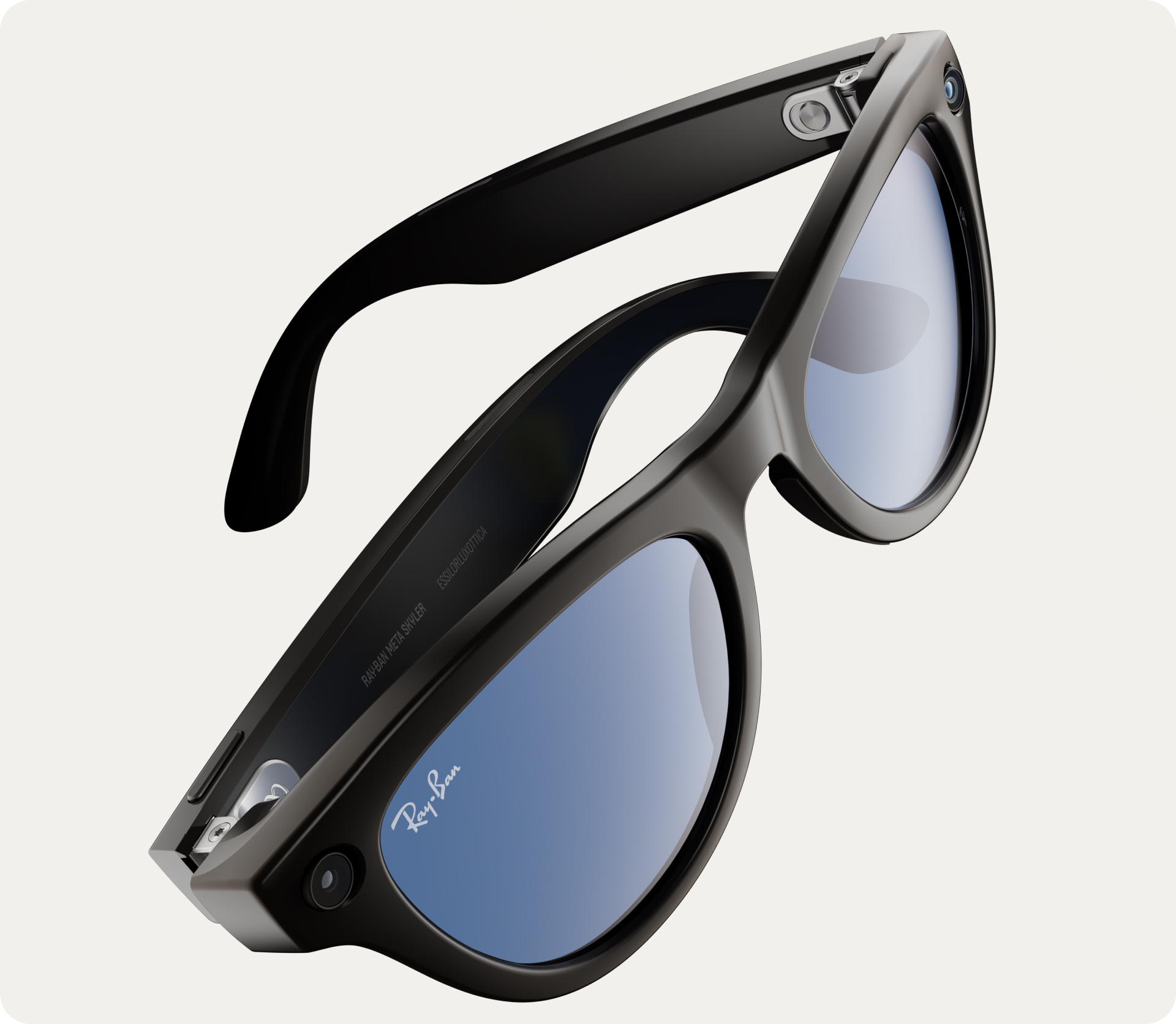
The distinction matters more than it might seem. Camera-equipped glasses like Meta Ray-Banand Samsung Galaxy Glasses are designed around content capture and AI vision — snap a photo, ask the AI what it sees, livestream to Instagram, translate text through the camera. The camera is the primary input; audio is the primary output.
Display-equipped glasseslike the Even Realities G2 flip that model. There is no camera, so there is no content capture. Instead, the glasses project information — notifications, meeting notes, navigation arrows, teleprompter text, live translations — directly into your field of view through a Micro-LED waveguide. The display is the primary output; your phone provides the input.
Each approach has real trade-offs:
- Privacy:Camera glasses draw scrutiny wherever recording indicators are visible (or potentially tampered with — see Meta’s new privacy light enforcement update). Display-only glasses raise zero privacy concerns for bystanders.
- Use case: Camera glasses excel at visual AI queries, social sharing, and content creation. Display glasses excel at professional productivity, presentations, and hands-free information access.
- Social acceptance:Even Realities reports 8–10 hours of daily wear. Most camera glasses users wear them significantly less, partly because social norms around face cameras remain unsettled.
- Workplace fit: Many workplaces prohibit camera devices in meetings and sensitive areas. Camera-free glasses face none of these restrictions.
Even Realities G2: What You Get for $599
The Even G2 packs a surprising amount of technology into a 36-gram magnesium-alloy and titanium frame:
- Display: Micro-LED waveguide, 640×350 pixels, 60Hz, 1,200 nits brightness
- Battery: Two days per charge with backup from the charging case
- Weight: 36 grams — lighter than most regular prescription glasses
- Water resistance: IP65 rated for rain and sweat
- Key features: Teleprompter, turn-by-turn navigation in-lens, notification mirroring, live translation, Even AI assistant
- Optional controller: Even R1 smart ring ($249) for gesture-based interaction
- Prescription lenses: Available for approximately $150 additional
Review consensus from Tom’s Guide, Gizmodo, and PCWorld is that the hardware is genuinely impressive, though the software still has rough edges — particularly around health metrics display stability and Bluetooth connectivity. Even Realities has been pushing frequent firmware updates to address these issues.
How Does the Even G2 Compare to Meta Ray-Ban?
These products are different enough that calling it a head-to-head comparison is misleading — but buyers often weigh them against each other because they are both smart glasses under $600. Here is how they line up:
- Price: Even G2 costs $599 ($750 with prescription lenses) versus Meta Ray-Ban at $379. The G2 is 58% more expensive.
- Display vs Camera:G2 has a display but no camera. Meta Ray-Ban has a camera but no display. This is the fundamental fork — you cannot get both in one product today.
- AI: Both have AI assistants. Even AI focuses on productivity (summarizing meetings, looking up information). Meta AI leans conversational and visual (describe what the camera sees, answer questions).
- Weight: G2 at 36g is noticeably lighter than Meta Ray-Ban at ~49g.
- All-day wear:G2 users average 8–10 hours daily. Meta Ray-Ban is typically used in shorter sessions.
- Ecosystem: Meta ties into Instagram, WhatsApp, and Facebook. Even Realities is platform-agnostic and works with any phone.
Where Do Samsung Galaxy Glasses Fit?
Samsung’s Galaxy Glasses, expected at $379–$499 this fall, sit squarely in the camera-equipped camp alongside Meta Ray-Ban. They offer a 12MP Sony camera, Gemini AI, and audio output — but no display. The key differentiators versus Meta Ray-Ban are Android XR integration, Gemini AI (versus Meta AI), designer frames from Gentle Monster and Warby Parker, and Galaxy Ring gesture control.
Notably, Google confirmed Galaxy Glasses will work with iPhones as well as Android, removing what many expected to be the biggest limitation. For buyers choosing between camera-equipped glasses, the Galaxy Glasses vs Meta Ray-Ban decision comes down to ecosystem preference. But if you want a display, neither Samsung nor Meta offers one yet — the Even G2 is the only serious option in the consumer space.
Which Smart Glasses Should You Buy?
Buy the Even Realities G2 ($599) if:you want a heads-up display for professional productivity — meeting notes, presentations, navigation, notifications — and you value all-day comfort and zero privacy concerns. The G2 is the best display-equipped smart glasses available, and the 36g weight makes genuine all-day wear realistic.
Buy Meta Ray-Ban ($379) if: you want camera-based AI, social media integration, and a proven product with years of software updates behind it. The Meta Ray-Ban remains the best camera-equipped smart glasses you can buy today, and at $379 it is $220 cheaper than the G2.
Wait for Samsung Galaxy Glasses ($379–$499) if: you want camera-equipped smart glasses but prefer the Android ecosystem, Gemini AI, or Gentle Monster/Warby Parker frames. Expect a July 22 Unpacked reveal with Fall 2026 availability.
Skip all of them if:you want both a camera and a display in the same product. That combination does not exist in a consumer product today — check back in 2027, when Samsung’s display-equipped “Haean” model is rumored.
Related Articles
Frequently Asked Questions
- How much do Even Realities G2 smart glasses cost?
- The Even Realities G2 costs $599 for the base frame. Adding prescription lenses runs approximately $150 extra, bringing the total to around $750. The optional Even R1 smart ring controller sells separately for $249. By comparison, Meta Ray-Ban starts at $379 and Samsung Galaxy Glasses are expected at $379 to $499.
- Do Even Realities G2 glasses have a camera?
- No. The Even G2 is deliberately designed without a camera. It uses Micro-LED waveguide optics to project information into your line of sight — notifications, navigation, teleprompter text, and translations — without any recording capability. This eliminates the privacy concerns that come with camera-equipped smart glasses like Meta Ray-Ban.
- Are camera-free smart glasses better than camera smart glasses?
- Neither is objectively better — they serve different use cases. Camera-free glasses like the Even G2 are ideal for professionals who want discreet information access, meeting notes, and navigation without privacy concerns. Camera-equipped glasses like Meta Ray-Ban are better for content creation, visual AI identification, and social sharing. Your use case should determine which approach fits.
- How long does the Even Realities G2 battery last?
- Even Realities rates the G2 at two days of battery life per charge, with the charging case providing additional backup charges. Users report averaging 8 to 10 hours of daily wear, which is significantly higher than typical smart glasses usage. The IP65-rated frame weighs just 36 grams.
- Should I wait for Samsung Galaxy Glasses or buy Even G2 now?
- Samsung Galaxy Glasses and the Even G2 serve completely different purposes. Galaxy Glasses are a camera-and-audio AI device similar to Meta Ray-Ban, while the Even G2 is a display-and-productivity device with no camera. If you want a heads-up display for professional use, the G2 is available now. If you want an AI camera assistant, wait for Galaxy Glasses or buy Meta Ray-Ban today.