Meta Conversation Focus Paywall Explained: What Changed and Who Should Care (2026)
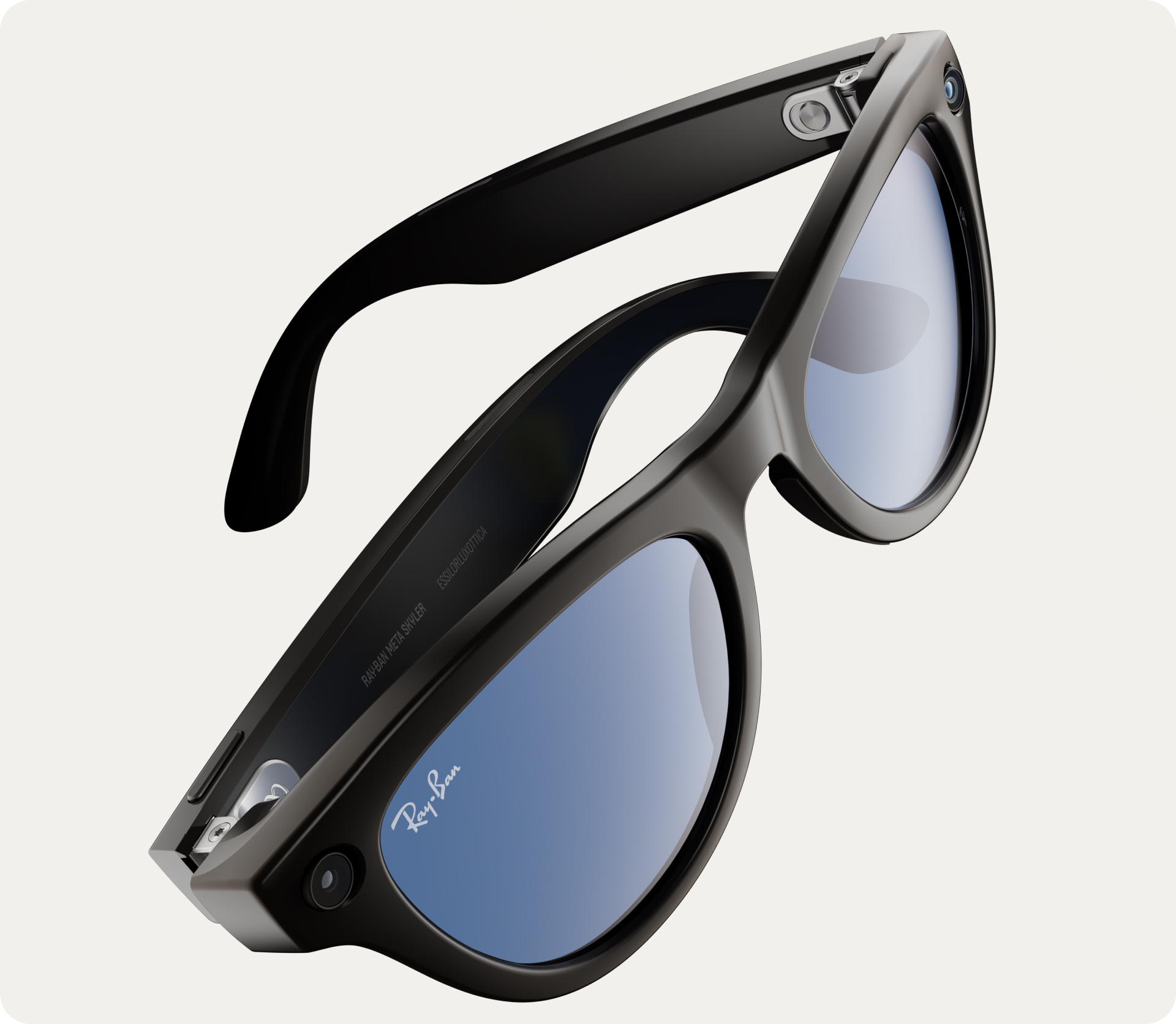
Meta just drew a line through one of its most-loved smart glasses features. Conversation Focus — the beamforming audio isolation that lets you hear one person clearly in a noisy room — is now capped at 3 hours per month for free users. Anything beyond that requires a $19.99/month Meta One Premium subscription. The backlash has been fierce, and it raises a bigger question: is Meta setting a precedent for paywalling hardware capabilities across all smart wearables?
What Changed
Conversation Focus capped at 3 hrs/month free. $19.99/month Meta One Premium extends it to 15 hours. The feature runs on-device — no cloud processing.
Why It Matters
This is a hardware capability being locked behind software. The glasses' microphones do all the work locally — Meta is charging for permission to use your own hardware.
Bottom Line
Casual users won't notice. Power users in noisy environments face a $240/year add-on. Compare all smart glasses.
How Does Conversation Focus Actually Work?
Conversation Focus uses the Meta Ray-Ban'sfive built-in microphones to perform real-time beamforming. When activated, the glasses identify the voice of the person directly in front of you and suppress ambient sound — restaurant chatter, street noise, music. The processed audio plays through the glasses' open-ear speakers, making it dramatically easier to follow a conversation in crowded spaces.
The critical detail: every bit of this processing happens on-device. The microphones capture directional audio, the glasses' onboard chip applies the beamforming algorithm, and the cleaned-up audio plays locally. No data leaves the glasses. No cloud server is involved. This is what makes the paywall so controversial — Meta is not providing a server-side service. They are restricting access to a computation that your purchased hardware already performs.
What Exactly Does Meta One Premium Include?
Meta One Premium launched alongside the Conversation Focus cap. Here is the full breakdown of what $19.99/month gets you compared to the free tier:
- Conversation Focus: 15 hours/month (free tier: 3 hours)
- Advanced AI features: Priority access to Muse Spark experimental capabilities including enhanced visual search and context-aware scene description
- Cloud storage: Expanded backup for photos and videos captured on the glasses
- Priority support: Faster response times from Meta's hardware support team
At $239.88 per year, Meta One Premium is comparable to what Oura charges for its membership ($71.88/year) and WHOOP charges for its subscription ($239/year) — but those services involve continuous health data processing in the cloud. Meta's core paywalled feature is a local audio computation.
Why Are Users So Angry About This Change?
The backlash centers on one argument: you already paid for the hardware. When you buy Meta Ray-Ban smart glasses for $379+, you get the physical microphones and processor that make Conversation Focus possible. The feature was free when it launched. Meta is now adding a software gate over a hardware capability users already own — a move that feels more like a downgrade than a new premium tier.
The comparison to Apple's AirPods Pro 3 sharpens the criticism. Apple offers Conversation Awareness and Adaptive Audio — similar voice-isolation features — at no recurring cost. You buy the earbuds for $249 and every software feature is included, permanently. Apple even extends new audio features to older AirPods Pro models via free firmware updates. The contrast is stark.
Does This Change the Meta Ray-Ban Buying Decision?
It depends entirely on how you use the glasses. If Conversation Focus is a daily driver — you commute on a noisy train, work in open-plan offices, eat at busy restaurants regularly — 3 hours per month will vanish fast, and you are effectively looking at a $379 + $240/year total cost of ownership. Over two years, that is $859 for what was recently a $379 purchase.
If you mainly use the glasses for AI queries, photo/video capture, and music, the free tier changes nothing. Conversation Focus is one feature among many, and most users may find 3 hours per month adequate for occasional use. The glasses remain the most capable smart glasses on the market for camera quality, AI integration, and audio performance. Check current pricing in our Meta Ray-Ban price tracker.
What Should Buyers Consider Before Samsung Unpacked?
Samsung's Galaxy Glasses launch at Unpacked on July 22 — less than three weeks away. The timing of Meta's paywall is either terrible luck or a calculated move to lock in recurring revenue before a major competitor arrives. Samsung's glasses will run Google Gemini AI and integrate with Galaxy Ring gesture controls, creating an ecosystem play Meta cannot match.
If you are shopping for smart glasses right now, our recommendation is to wait until after July 22. You will have Samsung's official pricing and feature list, plus Meta may adjust the Meta One Premium terms in response to competitive pressure. If you need to buy today and Conversation Focus matters to you, factor the $240/year subscription into your budget and compare against the AirPods Pro 3 at $199 with free voice isolation, or explore the full field in our smart glasses comparison.
Will Other Wearable Companies Follow Meta's Lead?
This is the broader concern. If Meta successfully monetizes an on-device feature through a subscription, it creates a template for the entire wearables industry. Imagine smartwatch manufacturers capping heart-rate monitoring at 10 readings per day, or earbuds makers limiting noise cancellation to a few hours without a monthly fee. The precedent is troubling.
That said, the backlash itself may serve as a check. Apple has so far resisted subscription-gating hardware features on its wearables. Samsung has not announced any subscription plans for Galaxy Glasses. If the market punishes Meta with lower sales or higher return rates, other companies will take note. For now, Meta is testing the boundary between hardware ownership and software licensing — and users are pushing back hard.
Related Articles
Smart Glasses FAQ
Meta Conversation Focus Paywall: Common Questions
Quick answers about Meta's Conversation Focus paywall, Meta One Premium, and how it compares to competitors.
What is Meta Conversation Focus and why was it paywalled?
Conversation Focus is a feature on Meta Ray-Ban smart glasses that uses beamforming microphones to isolate the voice of the person you're facing, cutting background noise. Meta moved it behind the $19.99/month Meta One Premium tier in July 2026, limiting free users to 3 hours per month.
Does Conversation Focus require cloud processing?
No. Conversation Focus runs entirely on-device using the glasses' built-in directional microphones. No audio is sent to Meta's servers, which is why many users feel it should remain free — the hardware they already paid for does all the work.
How much does Meta One Premium cost?
Meta One Premium costs $19.99 per month ($239.88 per year). It includes extended Conversation Focus (15 hours/month), priority access to advanced AI features, and expanded cloud photo/video storage.
Do AirPods Pro 3 have a similar feature without a subscription?
Yes. Apple's AirPods Pro 3 include Conversation Awareness and Adaptive Audio at no extra cost. When you start speaking, the AirPods automatically lower music and enhance the voice of the person in front of you — no subscription required.
Should I still buy Meta Ray-Ban smart glasses after the paywall?
If you rarely use noisy-environment voice isolation, the free tier's 3 hours per month may be plenty. The glasses still offer excellent AI, camera, and audio features without the subscription. But if Conversation Focus is a daily need, factor in $240/year on top of the $379 purchase price.