Samsung Galaxy Glasses vs Meta Ray-Ban: Which AI Smart Glasses Should You Buy in August 2026?
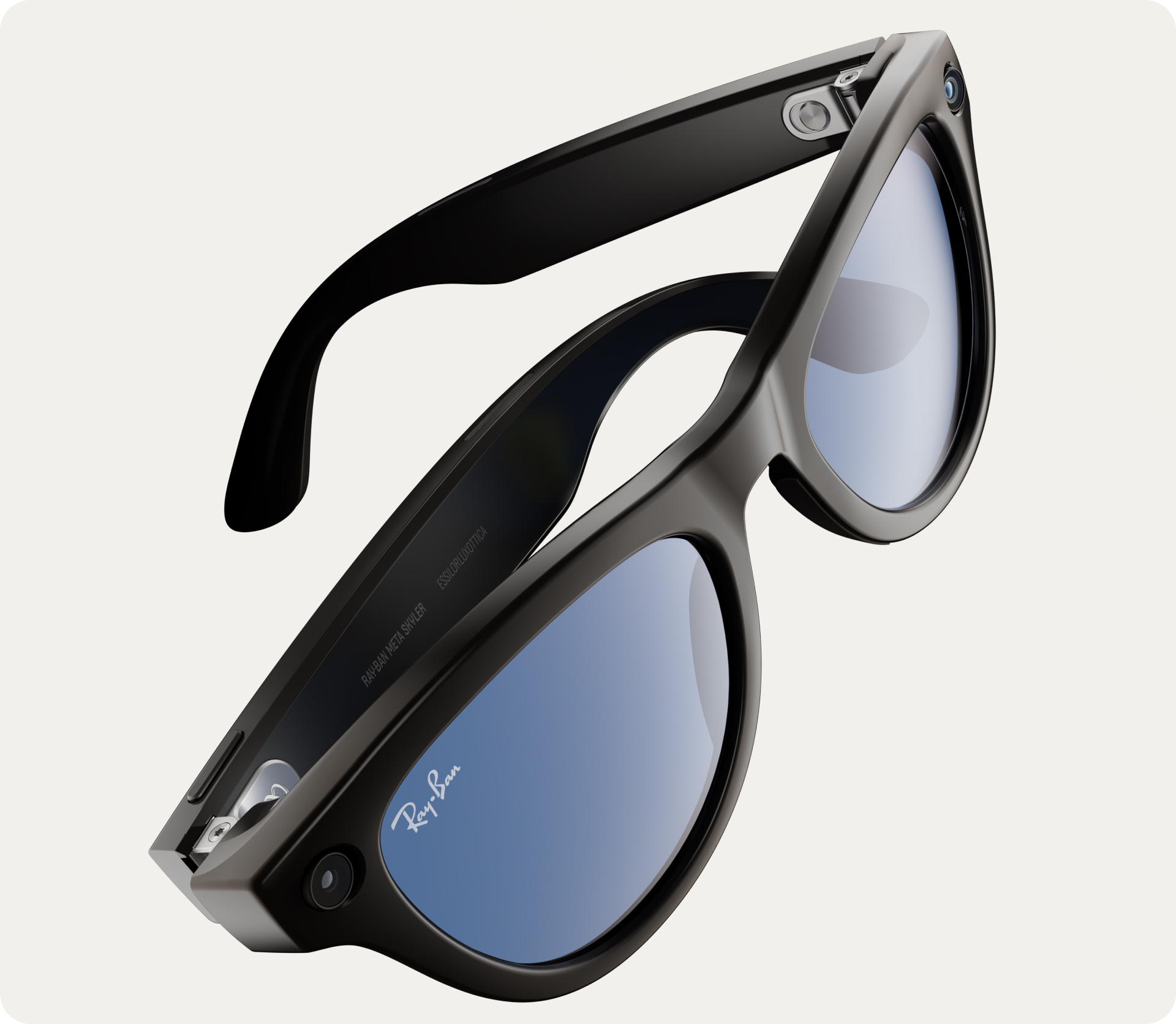
For the first time since Meta's Ray-Ban partnership defined the smart glasses category, there's a head-to-head competitor at the same price. Samsung's Galaxy Glasses ship this month at $379 — exactly matching the Meta Ray-Ban's Amazon price. Both pack 12MP cameras and AI assistants, but the ecosystems, phone requirements, and AI capabilities differ sharply. Here's how to choose.
Samsung Galaxy Glasses
$379 · 12MP Sony IMX681 · Gemini AI · Android XR · 50g · Samsung phones only
Meta Ray-Ban
$379 · 12MP camera · Meta AI · Works with any phone · 55g · Iconic Wayfarer design
Our Pick
Samsung if you're all-in on Galaxy. Meta if you need cross-platform or prefer Ray-Ban's styling.
How Do the Cameras Compare?
Both glasses use 12MP sensors, but Samsung's Sony IMX681 is a newer sensor with improved low-light performance and HDR processing. In well-lit conditions, the difference will be marginal. In bars, restaurants, and evening events, Samsung's sensor should produce noticeably cleaner photos with less noise.
Meta's advantage is video stabilization — the Ray-Ban Meta has had three years of software refinement for its video pipeline, producing smoother footage during walking and movement. Samsung's first-generation stabilization will likely be rougher at launch.
Both can stream live video for AI analysis. Samsung uses Gemini Live, letting you point the camera at a menu, landmark, or product and ask questions. Meta uses Meta AI with similar capabilities but adds Instagram and Facebook integration — you can share photos directly to Stories without touching your phone.
Which AI Assistant Is Better: Gemini or Meta AI?
This is the most consequential difference. Gemini excels at multi-step reasoning, contextual follow-ups, and deep integration with Google services. Ask it to "find Italian restaurants near me that are open now and have outdoor seating," and it chains Maps data, business hours, and reviews seamlessly. It also reads your Gmail and Calendar for contextual reminders.
Meta AI is more conversational and better at visual identification — it recognizes landmarks, plants, dog breeds, and products with higher accuracy. Its social features are unmatched: hands-free WhatsApp and Messenger messaging, Instagram Story posting, and Facebook Live streaming directly from the glasses.
Bottom line: If you want a productivity tool that integrates with Google's ecosystem, Gemini wins. If you want a social and lifestyle device, Meta AI wins.
What About Battery Life and Weight?
Samsung's Galaxy Glasses edge ahead in both categories. The 155mAh battery provides approximately 9 hours of mixed use (occasional photos, some AI queries, light audio) versus the Meta Ray-Ban's roughly 6-7 hours. Both come with charging cases that extend total battery life — Samsung's case adds 7 charges, Meta's adds about 8.
At 50 grams, Samsung's Galaxy Glasses are 5 grams lighter than the Meta Ray-Ban's 55g. That's a subtle difference, but over a full day of wear, lighter glasses reduce nose fatigue and feel more like regular eyewear.
Do Galaxy Glasses Work with iPhones?
No. This is the Galaxy Glasses' biggest limitation. They require a Samsung Galaxy S24 or newer running One UI 7. If you have an iPhone, a Pixel, or an older Samsung phone, the Galaxy Glasses won't work. Meta Ray-Ban works with any iPhone (iOS 16+) or Android phone — a massive compatibility advantage.
Samsung's reasoning is that offloading all processing to the phone enables the lightweight 50g design. But it means Galaxy Glasses are a Samsung ecosystem product, not a standalone accessory. If you're not already in Samsung's ecosystem, this is a dealbreaker.
Which Should You Buy?
Buy Samsung Galaxy Glasses if: You own a Samsung Galaxy S24 or newer, want Gemini AI integration with Google services, prefer lighter glasses, and value longer battery life. The Galaxy Glasses also integrate with Galaxy Watch and Galaxy Buds for a unified ecosystem.
Buy Meta Ray-Ban if: You use an iPhone or non-Samsung Android phone, want social media integration (Instagram, Facebook, WhatsApp), prefer the iconic Ray-Ban Wayfarer design, or want a more mature product with three years of software refinement. Check the best Meta Ray-Ban prices.
Wait if: You want a display-equipped smart glasses experience. Samsung's Galaxy Glasses Pro with a micro-LED display is expected in early 2027, and Meta's Ray-Ban Display is also in the pipeline. Browse all smart glasses or use the compare tool.
Related Articles
Smart Glasses FAQ
Samsung Galaxy Glasses vs Meta Ray-Ban: Common Questions
Quick answers covering pricing, compatibility, AI assistants, and which to buy.
Are Samsung Galaxy Glasses better than Meta Ray-Ban?
It depends on your phone. Samsung Galaxy Glasses require a Samsung Galaxy S24 or newer, while Meta Ray-Ban works with any iPhone or Android phone. If you're in Samsung's ecosystem, the Galaxy Glasses offer tighter integration with Galaxy AI and Gemini. If you use an iPhone or non-Samsung Android, Meta Ray-Ban is your only option at this price point.
How much do Samsung Galaxy Glasses cost?
Samsung Galaxy Glasses start at $379 for the base model, with premium frame styles expected up to $499. This matches the Meta Ray-Ban's $379 price on Amazon. A higher-end Galaxy Glasses Pro with a micro-LED display is planned for 2027 at $600-$900.
Do Samsung Galaxy Glasses have a display?
No, the 2026 Galaxy Glasses are camera-forward with no built-in display. They rely on audio output from directional speakers and AI-powered responses via Gemini. The 2027 Galaxy Glasses Pro model is expected to add a micro-LED AR display.
Can I use Samsung Galaxy Glasses with an iPhone?
No. Samsung Galaxy Glasses require pairing with a Samsung Galaxy smartphone (S24 or newer) running One UI 7 or later. They are not compatible with iPhones or non-Samsung Android phones. If you need iPhone compatibility, the Meta Ray-Ban is the best alternative at the same price.
Which AI assistant is better: Gemini or Meta AI?
Gemini excels at contextual understanding, multi-step tasks, and integration with Google services (Maps, Calendar, Gmail). Meta AI is stronger at visual identification, social media integration, and conversational style. For productivity, Gemini has an edge; for social features, Meta AI wins.