Samsung Galaxy Glasses Controls Leaked: What Buyers Should Know Before Unpacked
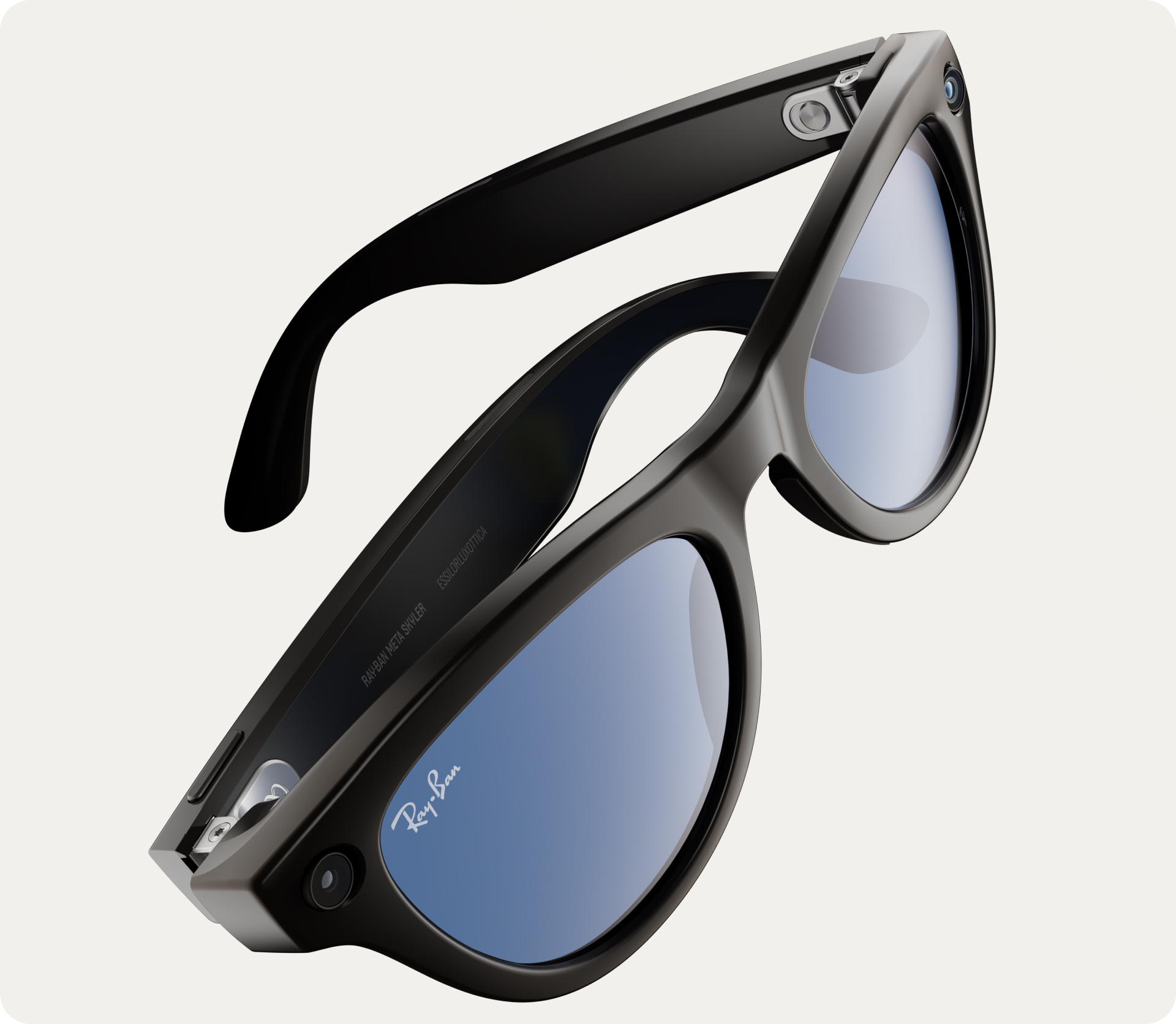
Twelve days before Samsung Unpacked in London, leaked how-to animations from SammyGuru and 9to5Google have given us the most detailed look yet at how you'll actually use the Galaxy Glasses. The Warby Parker edition walkthrough videos reveal a control scheme that's both familiar and meaningfully different from the Meta Ray-Ban. Here's what the leaks tell us — and what they mean if you're choosing between these two glasses this fall.
The Leak
SammyGuru/9to5Google walkthrough videos show every Galaxy Glasses Warby Parker control — touchpad gestures, camera shutter, power button, and dual privacy LEDs.
Key Difference
Dual inside + outside privacy LEDs and Galaxy Ring gesture integration set Samsung apart from Meta's single-LED, phone-only approach.
What to Do Now
Wait for Unpacked (July 22) if you want Samsung. Otherwise, Meta Ray-Ban at $379 is proven and available today.
What Do the Leaked Walkthrough Videos Actually Show?
The animations, which appear to be from Samsung's own onboarding flow for the Warby Parker edition, walk new users through every physical control on the glasses. The right temple houses the primary interaction surface — a capacitive touchpad that responds to both one-finger and two-finger gestures.
Touchpad gesturesbreak down cleanly: swipe one finger forward or back along the temple to skip tracks, swipe two fingers to adjust volume up or down, and tap once for play/pause or to answer an incoming call. This is nearly identical to the Meta Ray-Ban's touch strip, which also uses forward/back swipes for tracks and taps for play/pause. Samsung's two-finger volume gesture is the main differentiator — Meta relies on a pinch-and-hold gesture that many users find awkward in practice.
The camera shutter button sits separately on the right temple as a dedicated physical button. A short press captures a 12MP photo from the Sony IMX681 sensor, while a press-and-hold starts video recording. This is a deliberate design choice — rather than mixing camera triggers into the touchpad (where accidental activations are common), Samsung gave the camera its own hardware. The Meta Ray-Ban uses a similar dedicated capture button, so both brands clearly agree that camera control needs to be intentional, not gestural.
Rounding out the hardware: a power button on top of the right temple and a volume rocker positioned toward the rear. This gives Samsung a physical backup for volume adjustments that the touchpad also handles — a thoughtful redundancy for situations where touch gestures are unreliable, such as wet or gloved hands.
How Does Samsung's Privacy Approach Compare to Meta's?
The most consequential detail in the leaks isn't a gesture — it's the dual LED indicator system. Samsung has placed recording indicators on boththe inside and outside of the frame. The outward-facing LED tells bystanders the camera is active, just like Meta's single LED. But the inward-facing LED confirms recording status to the wearer, solving a real problem: with Meta Ray-Ban, users sometimes aren't sure whether recording is active because the only visual feedback faces away from them.
This dual-LED approach is a direct response to the ongoing privacy debate around smart glasses cameras. Meta's approach — a single, small outward LED that critics say is too easy to miss — has drawn scrutiny from privacy advocates and even regulatory attention in Europe. Samsung's design doesn't eliminate privacy concerns entirely (no smart glasses camera can), but it demonstrates a more transparent approach that could resonate with buyers who are privacy-conscious themselves or worried about social perception.
For a deeper look at how Meta has addressed these concerns with recent firmware changes, see our coverage of the Meta Ray-Ban privacy light update.
What Specs and Hardware Do We Know So Far?
Between the leaked walkthrough videos and earlier reporting on the “Jinju” codename, we now have a fairly complete spec picture for the Galaxy Glasses:
- Camera: 12MP Sony IMX681 sensor — matching the Meta Ray-Ban's resolution
- Processor: Qualcomm Snapdragon AR1, purpose-built for smart glasses with on-device AI
- Battery: 155mAh — comparable to Meta Ray-Ban's capacity, expect roughly 4 hours of mixed use
- Weight: Approximately 50 grams — slightly lighter than Meta Ray-Ban despite similar hardware
- Frame partner: Warby Parker (confirmed), with additional frame styles expected
- Unique feature: Galaxy Ring gesture control integration for hands-free commands
The Snapdragon AR1 chip is worth paying attention to. Qualcomm designed it specifically for lightweight smart glasses, prioritizing AI inference and camera processing at extremely low power draw. If Samsung has optimized well, the Galaxy Glasses could match or exceed Meta Ray-Ban's battery life despite the slimmer form factor. The Galaxy Ring integrationis the wildcard — no competitor offers anything like a companion ring for gesture control, potentially allowing you to navigate your glasses without ever touching the frame.
Galaxy Glasses vs Meta Ray-Ban: Which Control Scheme Is Better for Buyers?
Now that we can compare the full control schemes side by side, the differences reveal each company's philosophy. Meta optimized for simplicity — fewer buttons, fewer gestures, a clean learning curve. Samsung optimized for flexibility— more input methods, physical backup controls, and an ecosystem of companion devices.
For music control, the experience is nearly identical. Both use temple swipes for track navigation and taps for play/pause. Samsung's two-finger volume swipe is arguably more intuitive than Meta's pinch gesture, but this is a marginal difference that most users will adapt to within a day.
For camera use, both use dedicated shutter buttons with press-for-photo, hold-for-video behavior. The real difference is in feedback: Samsung's dual LEDs give you more confidence that you're recording (or not recording) at any given moment.
The bigger strategic question is ecosystem. If you already own a Galaxy Buds 3 Pro and a Galaxy Ring, Samsung's glasses slot into a tightly integrated system where your ring can control your glasses and your watch can manage notifications. Meta offers none of that — the Ray-Ban is essentially a standalone device that talks to your phone and nothing else. For deeper analysis, our Galaxy Glasses vs Meta Ray-Ban pre-order guide walks through every comparison point.
Should You Buy Now or Wait for Samsung Unpacked on July 22?
With Unpacked just twelve days away, the answer depends on how committed you are to the Samsung ecosystem:
- Wait if: You own a Galaxy phone, Galaxy Ring, or Galaxy Watch. Samsung's ecosystem integration could make the Galaxy Glasses significantly more useful for you than any alternative. July 22 will confirm pricing ($379–$499 expected), frame options, and pre-order availability.
- Buy Meta Ray-Ban now if: You're platform-agnostic or use an iPhone. Meta's AI assistant is more mature, the app ecosystem is proven, and the glasses are shipping today. At $379, the price is competitive with Samsung's expected entry point.
- Wait for reviews if: You're undecided. Samsung's hardware looks strong on paper, but software, AI assistant quality, and real-world battery life can only be evaluated after hands-on testing. The leaked walkthrough shows polished onboarding, which is a good sign — but it's not a substitute for independent reviews.
The leaks confirm that Samsung has built a serious competitor, not a rushed response. The control scheme is well thought out, the dual privacy LEDs address a genuine weakness in Meta's design, and the ~50g weight at similar specs is an engineering achievement. But “serious competitor” and “better product” are different claims, and only the July 22 reveal and subsequent reviews will settle that question.
Browse all current options in our smart glasses guide or read our complete Galaxy Glasses Jinju breakdown for everything we know so far.
Related Articles
Galaxy Glasses Controls FAQ
Common questions about Samsung Galaxy Glasses controls and features
Quick answers to help you decide whether to wait for Galaxy Glasses or buy smart glasses today.
How do you control the Samsung Galaxy Glasses?
The Galaxy Glasses use a right-temple touchpad for most controls: one-finger swipe forward or back to skip tracks, two-finger swipe for volume, and a single tap for play/pause or answering calls. A dedicated camera shutter button on the right temple takes photos with a press and starts video with a press-and-hold. A power button sits on top of the right temple, with a volume rocker toward the rear.
Do the Samsung Galaxy Glasses have a privacy light?
Yes, and Samsung has gone further than Meta. The Galaxy Glasses feature dual LED indicators on both the inside and outside of the frame. The outward LED signals bystanders that the camera is active, while the inward LED confirms recording status to the wearer. Meta Ray-Ban uses only a single outward-facing LED.
How much will the Samsung Galaxy Glasses cost?
Pricing has not been officially confirmed, but leaks and analyst estimates point to a range of $379 to $499 depending on the frame style and lens options. The base Warby Parker edition is expected to start around $379, matching Meta Ray-Ban pricing. Samsung is expected to reveal final pricing at Unpacked on July 22, 2026.
When can you buy Samsung Galaxy Glasses?
Samsung will officially reveal the Galaxy Glasses at Samsung Unpacked on July 22, 2026 in London. Pre-orders are expected to open the same day or shortly after. Availability is projected for Fall 2026, likely September or October.
Are Samsung Galaxy Glasses better than Meta Ray-Ban?
It depends on your ecosystem. The Galaxy Glasses offer Galaxy Ring gesture control, dual privacy LEDs, and a slimmer design at roughly 50 grams. Meta Ray-Ban has a more mature AI assistant, a proven app ecosystem, and is available today at $379. Samsung's ecosystem integration is its biggest advantage, while Meta's head start in software is its strongest card.