XREAL Project Aura Hands-On: Should You Wait for Android XR Display Glasses in 2026?
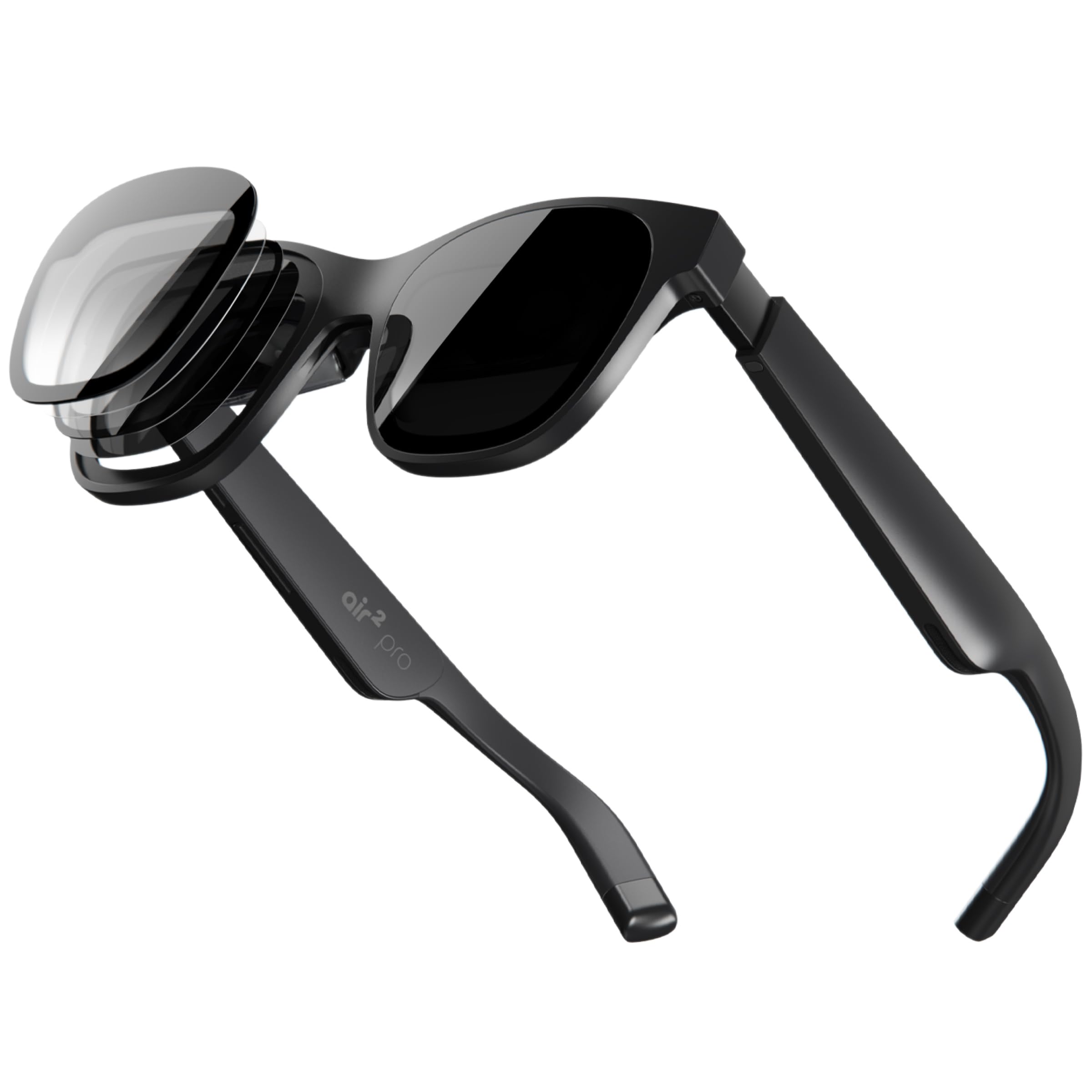
At Google I/O 2026, XREAL gave attendees the first hands-on experience with Project Aura — the first wired display glasses running Android XR. With a 70-degree OLED field of view, three cameras for hand tracking, and a tethered processing puck, Project Aura represents a significant step beyond XREAL's existing One Pro and Air 2 Prolines. Here's what the hands-on experience revealed and whether you should wait or buy current XREAL glasses now.
First Impressions
70° OLED field of view is a massive leap. Hand tracking works but needs polish. The tethered puck is a tradeoff worth considering.
Buy Now or Wait?
XREAL One Pro ($599) is great for media today. Wait for Aura if you want true AR with hand tracking and Android XR apps.
Compare Next
Browse all glasses in our smart glasses comparison or use the compare tool.
What Does the 70-Degree Field of View Feel Like?
The jump from the XREAL Air 2 Pro's 46 degrees to Project Aura's 70 degrees is immediately noticeable. Where Air 2 Pro feels like looking through a small window, Aura fills a meaningful portion of your peripheral vision. Virtual screens feel large enough to be genuinely productive — imagine a 27-inch monitor floating in front of you, rather than a 15-inch laptop screen.
The OLED display delivers rich colors and deep blacks, which matters when overlaying digital content on the real world. Because Aura uses optical see-through technology, you look through physical glass at the real world rather than watching a camera passthrough video feed like VR headsets. This makes the AR experience more natural and avoids the latency and resolution limitations of passthrough.
For comparison, the XREAL One Pro offers 57 degrees, which is already a step up from Air 2 Pro. Project Aura pushes further and enters territory previously reserved for dedicated AR headsets costing $2,000+.
How Does Hand Tracking Work on Project Aura?
Project Aura includes a three-camera system: two side-mounted cameras for hand tracking and spatial awareness, plus a center camera for photos, video, and Gemini visual understanding. At the I/O demo booth, XREAL demonstrated pinch, swipe, and point gestures for navigating Android XR interfaces.
In our brief hands-on, hand tracking was functional but still rough. Pinch-to-select worked reliably in front of the glasses, but edge-of-view gestures were less consistent. XREAL has months to refine this before launch, and the Android XR platform itself is improving hand tracking across all partner devices.
For precision input, the tethered processing puck includes a built-in trackpad and fingerprint sensor, giving you a physical backup when gestures aren't enough. This hybrid approach — hand tracking plus trackpad — is pragmatic for a first-generation device.
What Is the Tethered Puck and Is It a Dealbreaker?
Unlike standalone VR headsets that pack all processing into the headset, Project Aura offloads computation to an external processing puck connected via cable. The puck runs a Snapdragon processor and handles all the heavy lifting — AR rendering, hand tracking computation, and AI processing for Gemini features.
The upside: it keeps the glasses lightweight— significantly lighter than a Galaxy XR or Vision Pro. You can wear them for extended periods without neck strain. The downside: you carry an extra device in your pocket or clip it to your belt. It's a similar approach to what Magic Leap 2 used for enterprise AR.
Whether this is a dealbreaker depends on your use case. For seated work (desk, couch, airplane), the puck sits on the table and the cable isn't noticeable. For walking around or active use, the extra hardware is more cumbersome. Future generations will likely integrate the processing into the frames — but for 2026, the tethered approach is a necessary compromise.
How Does Project Aura Compare to Other AR and Smart Glasses?
Project Aura occupies a unique position in the market — more capable than consumer smart glasses, more portable than VR headsets:
- vs Ray-Ban Meta ($379): Ray-Ban Meta has no display — it's audio-only with a camera. Aura adds a full 70° AR display and hand tracking. Completely different use cases.
- vs XREAL One Pro ($599): One Pro offers 57° FoV for media consumption but lacks Android XR, hand tracking, and cameras. Aura is the One Pro's spiritual successor with true AR.
- vs Samsung Galaxy XR ($1,799): Galaxy XR is a full VR/MR headset with higher resolution but much heavier and more expensive. Aura trades immersion for portability.
- vs Apple Vision Pro ($3,499): Vision Pro offers the most polished spatial computing experience but at 4-5x the expected price and significantly more weight. Aura targets a different buyer entirely.
Should You Wait for Project Aura or Buy XREAL One Pro Now?
Buy the XREAL One Pro now ifyou primarily want display glasses for streaming, gaming, and personal theater. The One Pro at $599 is available today with a proven 57° display and doesn't require a tethered puck. It's the best media-focused display glass on the market.
Wait for Project Aura if you want a true AR experience with hand tracking, Android XR app support, Gemini AI visual understanding, and a 70° field of view. Expect to pay under $1,000 and deal with a tethered processing puck. Launch is before the end of 2026.
Buy Ray-Ban Meta at $379 if you just want AI smart glasses for everyday use — phone calls, music, Meta AI queries, and casual photos. No display, no tether, just smart glasses that look like normal sunglasses.
Related Articles
AR Glasses FAQ
XREAL Project Aura Buying Questions
Quick answers about pricing, specs, launch date, and how Project Aura compares to XREAL One Pro and Ray-Ban Meta.
When does XREAL Project Aura launch and how much will it cost?
XREAL confirmed Project Aura will ship before the end of 2026, with developer early access starting sooner. Pricing hasn't been officially announced, but analysts expect it to land under $1,000. For comparison, the XREAL One Pro is currently $599 and the Samsung Galaxy XR headset is $1,799.
What is the difference between XREAL Project Aura and XREAL One Pro?
Project Aura is a true AR display glass running Android XR with a 70° OLED field of view, hand tracking, and three cameras. It connects to a tethered processing puck. The One Pro is a media-focused display glass with a 57° field of view designed primarily for streaming and gaming — it doesn't run Android XR or support hand tracking.
Does XREAL Project Aura require a phone or computer?
Project Aura connects to a tethered processing puck via cable — not directly to a phone. The puck contains a Snapdragon processor, trackpad, and fingerprint sensor, handling all the heavy computation. This keeps the glasses lightweight but means you carry an extra device.
Can XREAL Project Aura replace a VR headset like Meta Quest 3?
No. Project Aura is designed for augmented reality — overlaying digital content on the real world through transparent lenses. It's lighter and more portable than a VR headset but can't deliver the fully immersive experiences of a Quest 3 or Galaxy XR. Think of it as complementary: AR glasses for everyday use, VR headset for gaming and immersion.
Should I buy XREAL One Pro now or wait for Project Aura?
If you want display glasses primarily for streaming content on a large virtual screen, the XREAL One Pro at $599 is excellent and available now. If you want a true AR experience with hand tracking, Android XR apps, and Gemini AI, wait for Project Aura — but expect to pay more and deal with a tethered puck.